
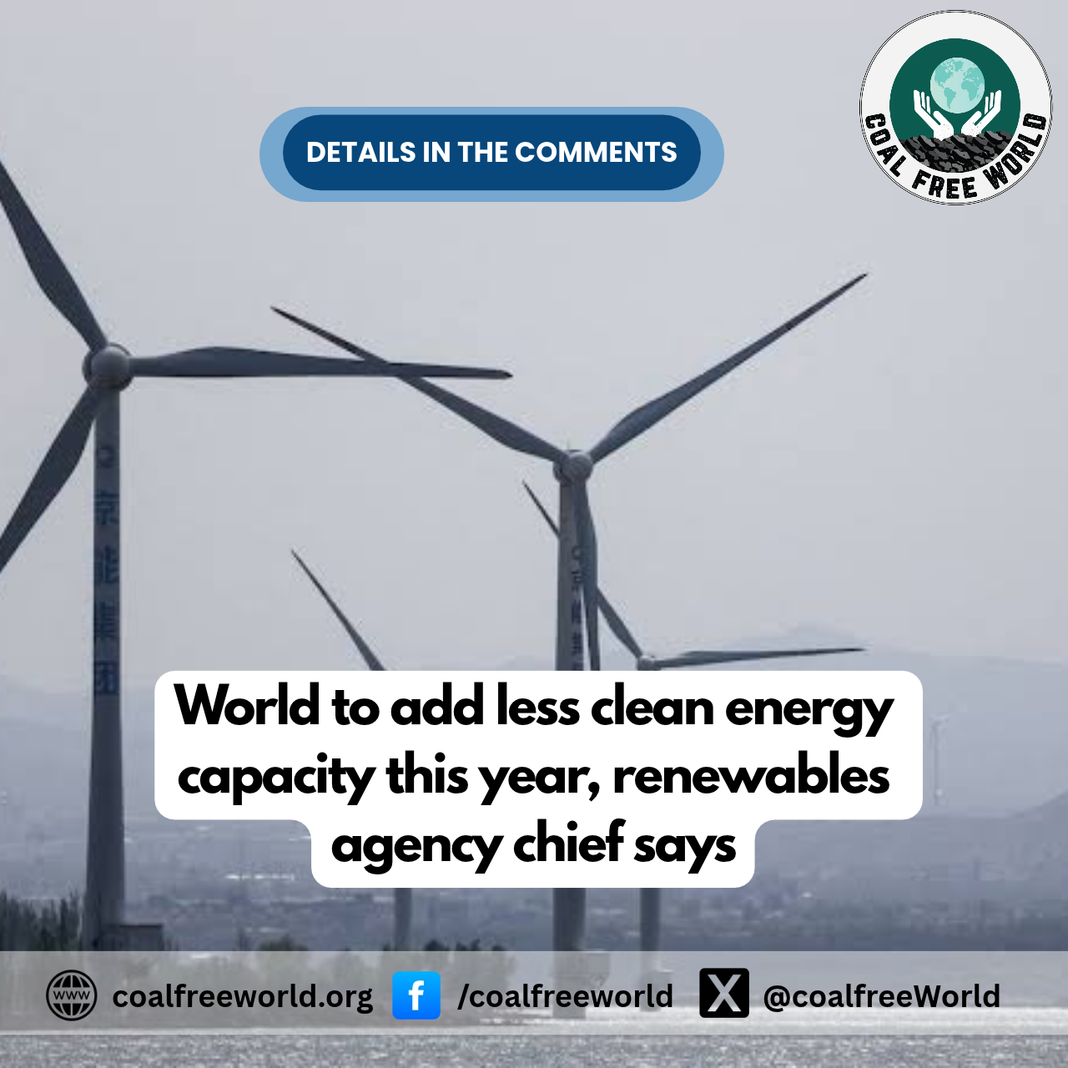

SINGAPORE, Oct 27 (Reuters) – The world will add less clean energy capacity in 2026 for the first time in five years due to inadequate transmission networks and trade barriers, the chief of the International Renewable Energy Agency (IRENA) said.
Growth in solar and wind capacity has been accelerating every year since 2021, when the coronavirus pandemic disrupted global supply chains. Clean power installations including hydropower surged a record 692 gigawatts, or 15.5%, to 5,149 GW in 2025 — representing half the world’s power capacity.
The Reuters Power Up newsletter by columnist Ron Bousso provides everything you need to know about the global energy industry. Sign up here.
Advertisement · Scroll to continue
Governments have pledged to boost clean energy use to ensure reliable power supply and cut costs, particularly after the US-Israeli war with Iran choked energy supplies and inflated prices. But IRENA Director-General Francesco La Camera noted that there has been a slowdown in renewables deployment in China due to curtailment — or rejection of clean power when a grid hits its limits.
“The main cause of a lack of new record in additions this year is the mismatch between generation capacity and the capacity to distribute and transmit electricity,” he told Reuters on the sidelines of the Singapore International Energy Week conference.
Advertisement · Scroll to continue
China, the world’s biggest renewable energy producer, turned away enough clean energy to power Mexico for a year in the first half of 2026, while networks in nations such as Australia and Japan also failed to keep pace with a surging renewables buildout.
“The amount of the (capacity) increase in the other parts of the world this year, I don’t think it will offset the slowing down in China,” La Camera said. He declined to provide a numerical forecast for expected growth in clean energy additions this year.
Renewable energy additions are crucial to reducing global emissions, and the United Nations said in a report last week that “urgent and stringent” emission cuts were required to slow global warming.
Reporting by Sudarshan Varadhan; Editing by Edwina Gibbs